

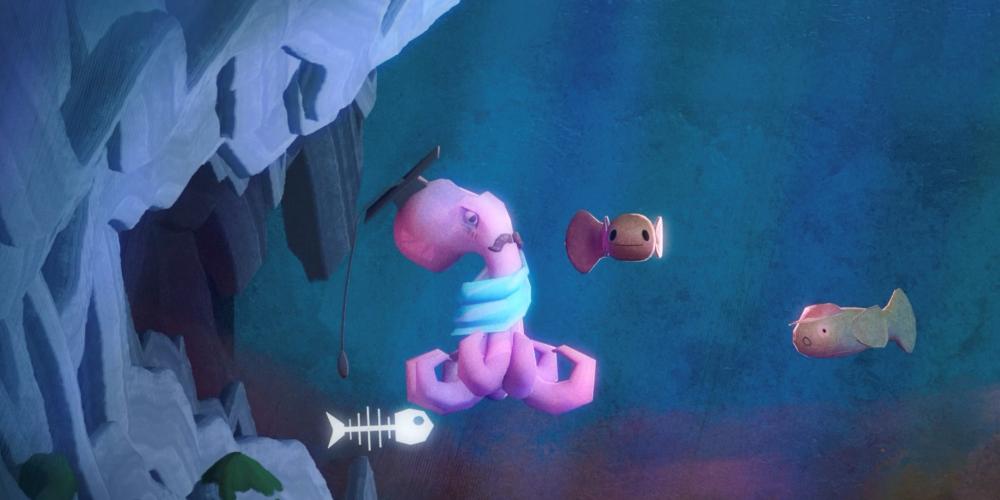


What happens to stories that are erased, memories that are repressed and knowledge that is never recognised as valuable? These questions lie at the heart of Mindblowers/Proximamente, an event organised by the VUB and KVS around the theme of ‘ghost memory’. Colombian researcher Adriana Moreno-Cely explores these issues in PULPO, a lecture-performance about the lasting influence of colonial thinking on our society.
In PULPO, you use the octopus as a metaphor to explore how colonial ideas about race, knowledge, progress and development continue to shape our society. Where does this metaphor come from?
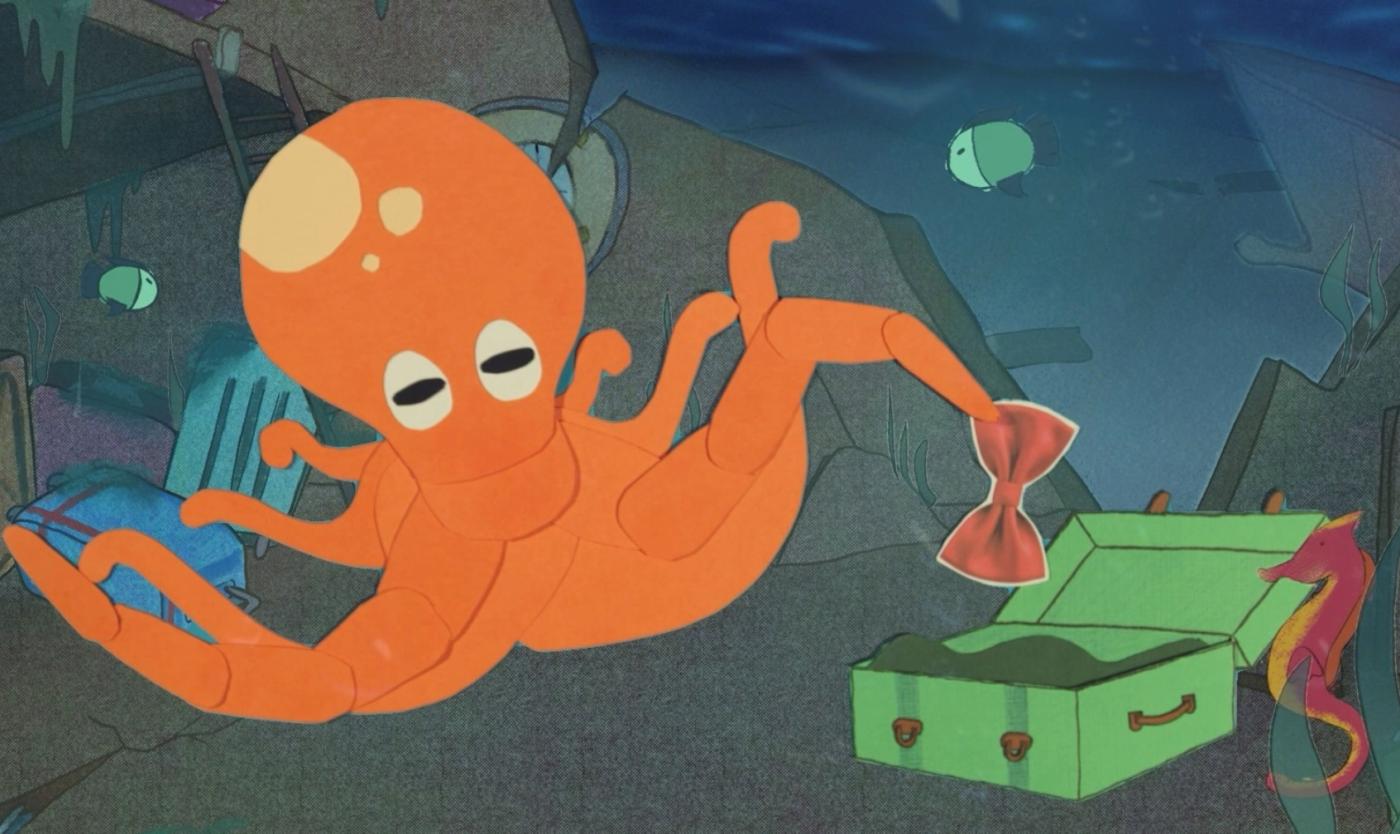
Adriana Moreno-Cely: “My work focuses on transdisciplinarity and decoloniality. For years, I have worked with Indigenous and local communities, whose knowledge is often overlooked by universities, organisations and governments. I wanted to explore how different forms of knowledge could be brought together to address the complex crises we face. In my research, I developed a framework of eight interconnected axes, represented by the arms of an octopus. They include the coloniality of knowledge, power, being, gender, technology, nature, spirituality and mind. Together, they show how the same colonial capitalist mindset continues to manifest itself in different areas of society.”
Mindblowers centres on the idea of ‘ghost memory’: stories and knowledge that have been repressed or erased, yet continue to have an impact. Which ghosts from our colonial past still haunt the way we view knowledge, progress and development today?
“One example is the belief that good science must be neutral and objective. This idea remains deeply embedded in academia, but neutrality is a myth. Every form of knowledge is shaped by the context in which it is produced and by our own subjectivities.
Another example is our faith in technology as the ultimate solution to the crises we face. The green transition, for instance, is presented as progress, but the production of green technologies also requires the extraction of natural resources, often from territories belonging to Indigenous communities. These communities have already suffered centuries of dispossession in the name of development.
Spirituality is another important example. During colonial times, Christianity was imposed on colonised populations as a way of supposedly bringing humanity to people who were not considered fully human. This colonial legacy is still visible today in the way certain groups are dehumanised because of their religious beliefs, origins or gender. We see this, for example, in Islamophobia and in the way Palestinians are portrayed as less than human.”
“Every form of knowledge is shaped by the context in which it is produced”
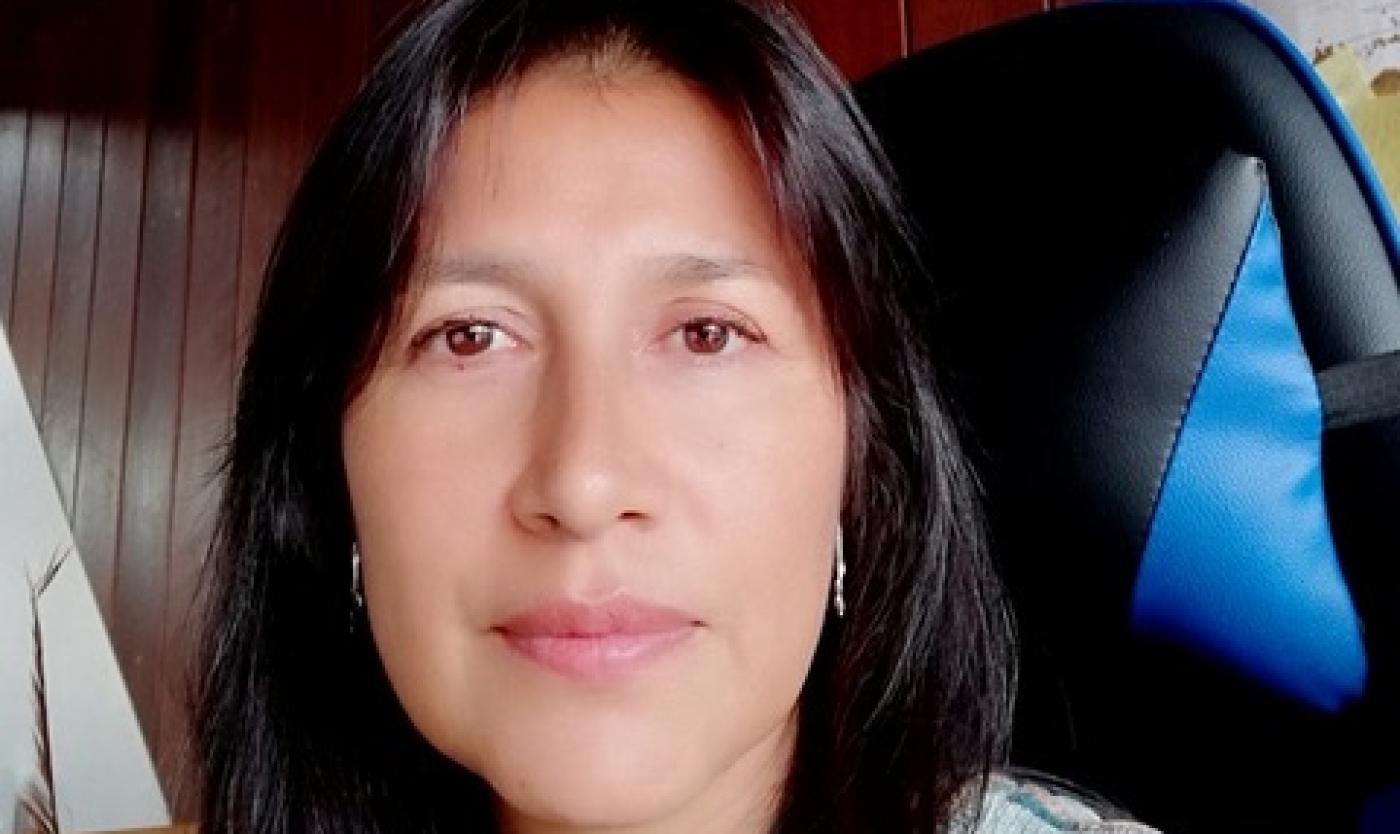
Adriana Moreno-Cely
Who has historically had the power to determine what constitutes knowledge, and do we still see those power dynamics reflected in universities and academia today?
“Absolutely. Our school curricula, from primary education onwards, are still very Western-centred. Only certain voices and perspectives are represented, and this continues into higher education. Academia also privileges knowledge published in particular journals, most of which are in English. Researchers in the Global South often lack the resources to publish in these journals or access their contents. Even when they have valuable ideas, they struggle to make them visible.”
“Academic success is increasingly measured through publications, research funding and the number of projects researchers attract. This system tends to reproduce the same ideas and cite the same voices. Meanwhile, humanities, arts and social sciences are often among the first disciplines affected by budget cuts.”
If certain stories were forbidden from being told for generations, can we simply reclaim them today? Or do we risk distorting them once again when we approach them from a European or academic perspective?
“Of course there is a risk. Researchers from the Global North sometimes travel to the Global South, extract knowledge from local communities and transform it into academic publications without properly acknowledging its origins. This is what we call extractive research.
There is another danger: depoliticising these stories. Many forms of knowledge are closely connected to the political struggles of marginalised communities. When we remove them from that context, we risk losing their meaning and even harming the communities whose experiences we claim to represent.
The solution, for me, is genuine transdisciplinary collaboration: an honest, respectful and reciprocal dialogue between researchers and local communities. But this requires academics to transform themselves first, become more humble and recognise the value of knowledge traditionally dismissed as unscientific.”
Colonialism is often treated as a closed chapter of the past. What are we missing as long as we view it exclusively as history?
“Political independence did not necessarily give former colonies genuine autonomy. Colonial power structures were transformed rather than dismantled. We can still see this in international trade, where former colonial powers continue to influence the conditions under which countries can sell their resources and products.
Another form that remains very visible today is settler colonialism. It involves establishing a new state on land inhabited by other populations, often through dispossession and violence. We see this in United States, Canada, New Zealand and Australia, but also in Palestine, where the displacement and killing of the original inhabitants continues to be a central issue.
Coloniality also survives through racial hierarchies that determine whose lives are considered valuable and whose can be sacrificed in the name of economic development or political interests. These hierarchies continue to shape our world, even when formal colonial rule has ended. That is why we cannot simply treat colonialism as history.”
“We can learn from Indigenous knowledge that nature is not simply a resource to be extracted”
Mindblowers deliberately brings together Latin American and European perspectives. What can Europe learn from knowledge and stories from Latin America that have long been regarded as peripheral or less authoritative? And which European blind spots does this reveal?
“I am Colombian myself, and much of my research draws on Latin American thinkers and Indigenous knowledge. These perspectives offer important alternatives to dominant Western ways of thinking.
“We have a great deal to learn from Indigenous communities. In countries such as Bolivia and Ecuador, for example, there are important movements towards recognising nature as Mother Earth, rather than simply as a resource to exploit. Indigenous knowledge offers other ways of understanding our relationship with nature and with one another. Mountains and stones, for instance, can be understood as spiritual beings that deserve respect and are part of the systems that sustain life. This challenges us to rethink our relationship with the natural world and to recognise forms of knowledge that have been marginalised for centuries.”
Finally, why are events such as Mindblowers so important?
“Because they bring different forms of knowledge into dialogue. Western thinking has established hierarchies in which natural sciences are often considered more valuable than humanities, social sciences and the arts. But we need to recognise these different forms of knowledge as equally important if we want to find new ways of addressing society's complex challenges. I hope people come to experience the different performances and stories. There is a great deal we can learn from the artists and their perspectives.”
ID KIT
Adriana Moreno-Cely is a postdoctoral researcher at the Department of Educational Sciences of the Vrije Universiteit Brussel (VUB). Her work focuses on transdisciplinarity, decoloniality and the coloniality of knowledge.