

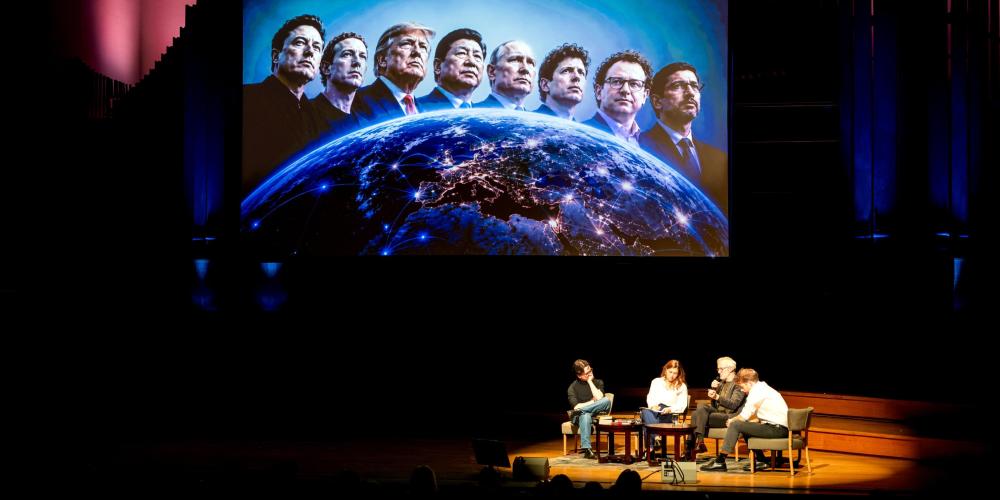


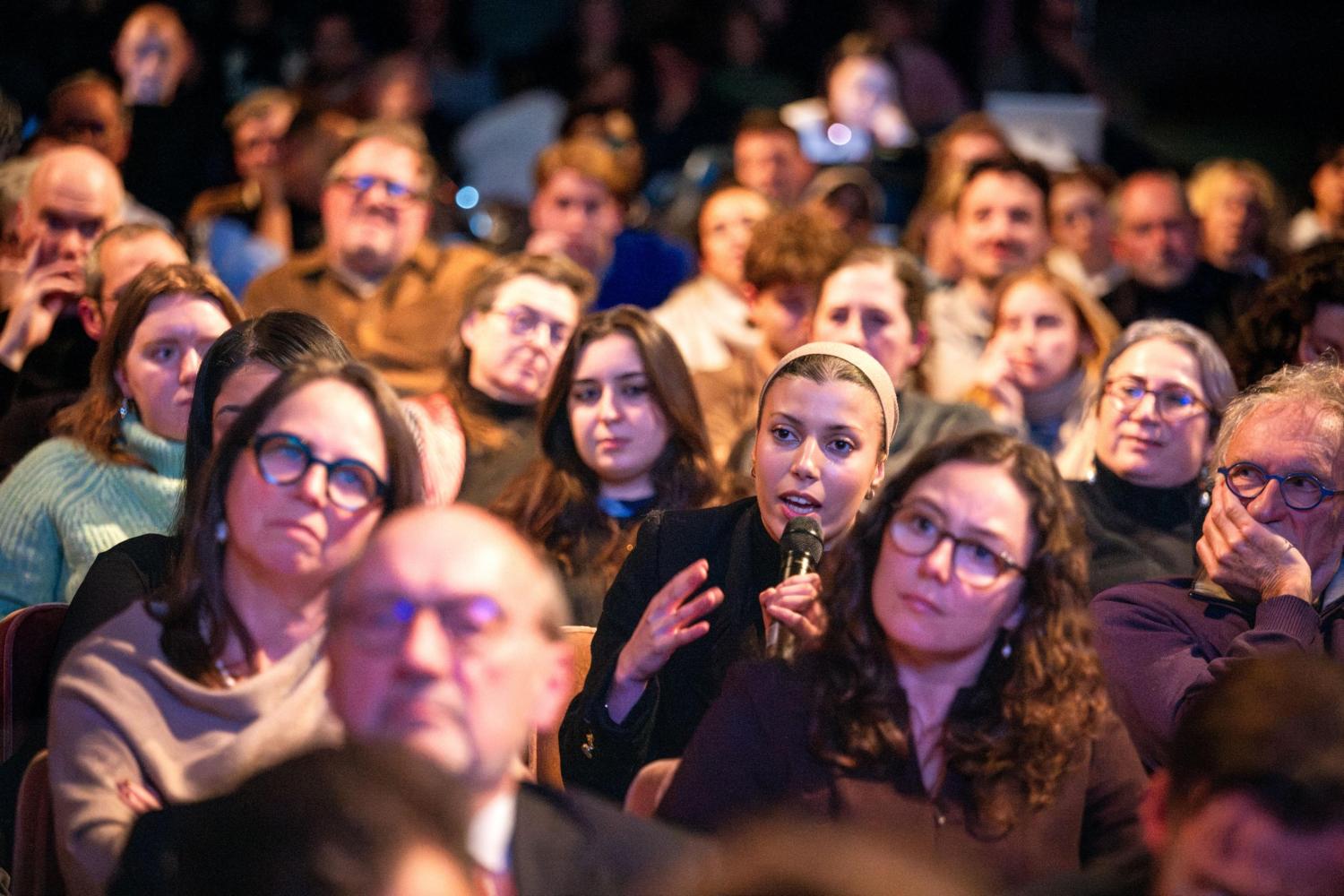
What happens when it is no longer governments, but technology companies, that determine what our society looks like? During Who Rules the World?, international thinkers Paul Verhagen, Diana Mangalagiu and David Van Reybrouck explored the real power dynamics before a packed audience at Flagey. Three VUB academics launched the debate with video questions that pressed where it hurts.
Watch the aftermovie
Next Caroline Pauwels Lecture | 16 February 2027 | Book your tickets now at the early bird rate
“Why? How? When?” With those three questions, curator Koert Debeuf evoked the memory of Caroline Pauwels at the start of the evening. Wonder and critical thinking were central to her outlook. She was always willing to challenge assumptions. Following that logic, a good lecture did not necessarily have to provide more answers. Rather, it should provide better questions.
And there was certainly no shortage of questions during Who Rules the World? On Big Tech and Democracy. As AI penetrates ever more deeply into our daily lives, power is shifting as well. From governments to companies, from democratic institutions to opaque algorithms, and from Europe to a handful of American technology giants.
When Big Tech Decides What Is True
The first question came from VUB professor Rob Heyman. Generative AI is making it increasingly difficult to distinguish fact from fiction, while companies such as OpenAI and Anthropic gain ever greater influence. How can citizens still make informed choices when the very information on which those choices are based can be manipulated?
Diana Mangalagiu immediately turned the reasoning around. AI did not make Big Tech powerful; Big Tech built the AI we are confronted with today. That also means the direction in which this technology evolves is not a law of nature. Democracies, she argued, must once again dare to decide what kind of technological future they actually want.
Paul Verhagen sees the problem as more fundamental. Anyone concerned about AI should, in his view, look at the economic system within which that technology is developed. A provocative question he often asks his students sums it up neatly: “Are you mad about AI or are you mad about capitalism?”
David Van Reybrouck, meanwhile, sees the line between the private and public spheres becoming increasingly blurred. Technology companies are taking over more and more functions and powers that were long in the hands of governments. And therein lies a major danger.
Should Europe Abandon Its Principles to Keep Up?
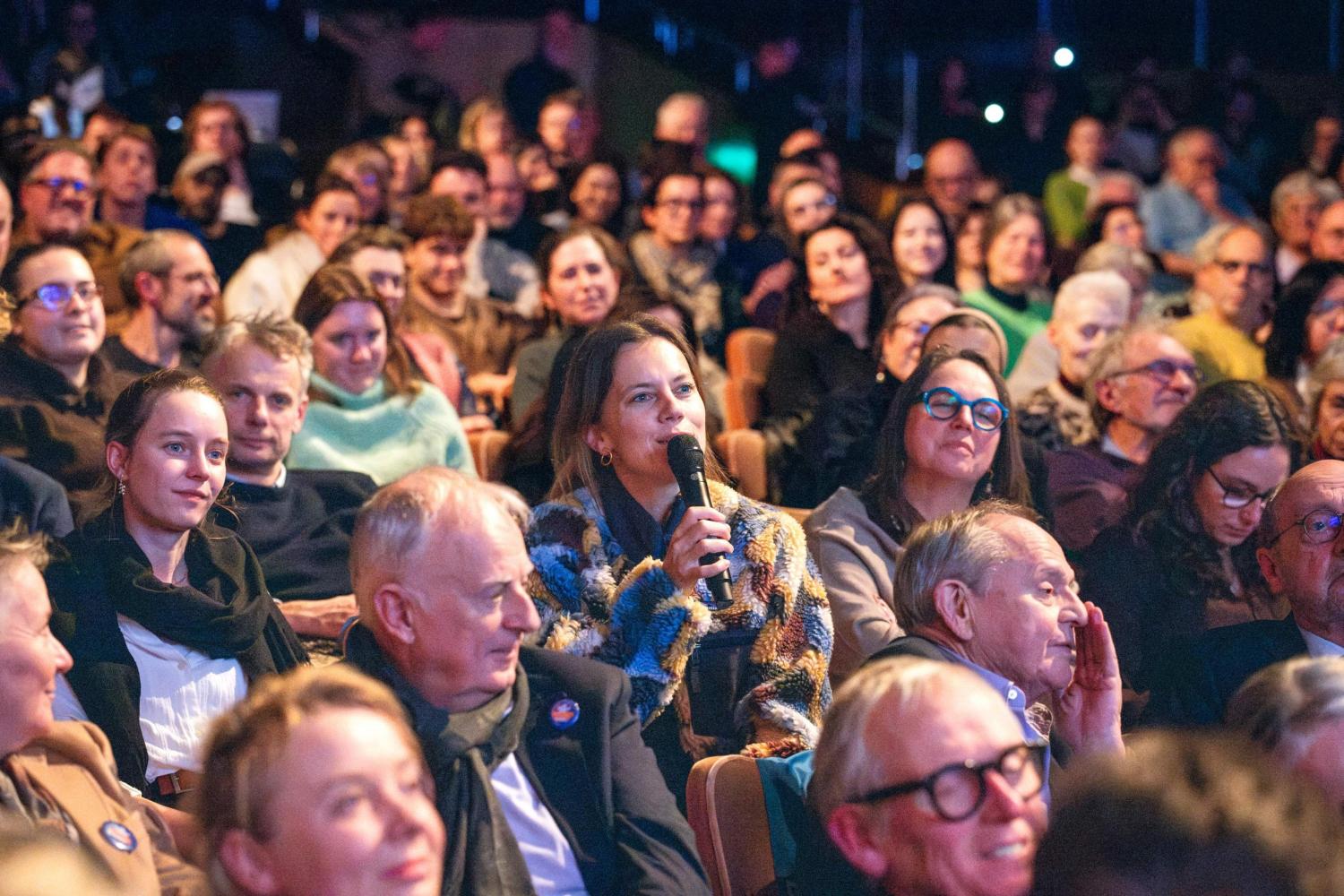
VUB professor Gloria González Fuster then raised the European paradox. For decades, Europe has developed rules around privacy, data and fundamental rights. Now that the international AI race is accelerating, we increasingly hear that those very regulations are slowing innovation down. Should Europe therefore relax its principles in order to remain technologically competitive?
According to Paul Verhagen, that is a false opposition. China demonstrates that strong regulation and rapid innovation can coexist, he noted. A more interesting question is which new public values and rights citizens need in a society increasingly shaped by AI. David Van Reybrouck emphasised who gets to set those rules. In his view, European AI legislation cannot succeed if citizens are merely spectators. Democratic participation must form a fundamental part of the technological transition.
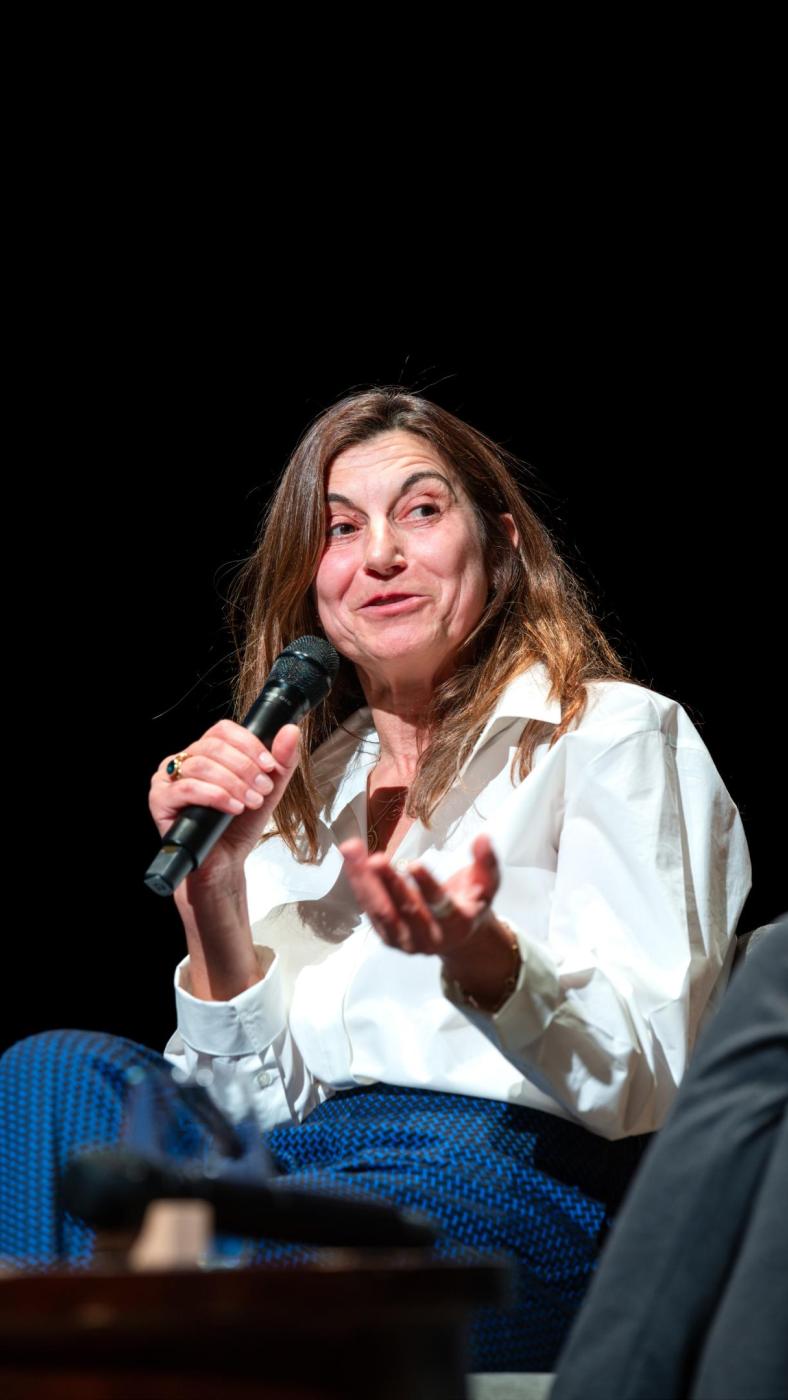
Diana Mangalagiu made the discussion tangible with an example from her own teaching experience. There is little point in banning AI from the classroom. Her students are free to use the technology, provided they are transparent and continue to think for themselves: “You can use whatever you want. But there are a few conditions. You tell me what you do, and you show me your added value and your critical thinking.”
And What If the AI Builders Themselves Are Raising the Alarm?
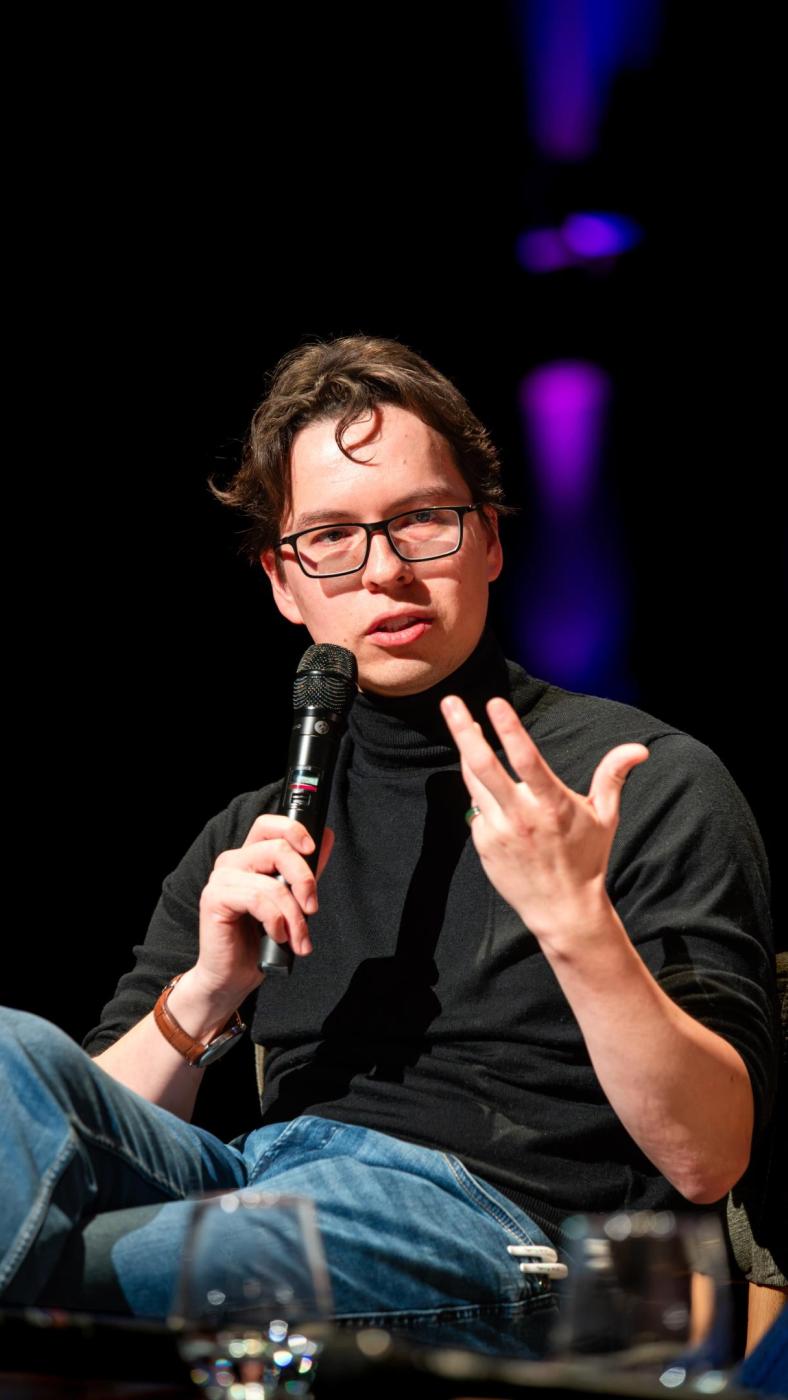
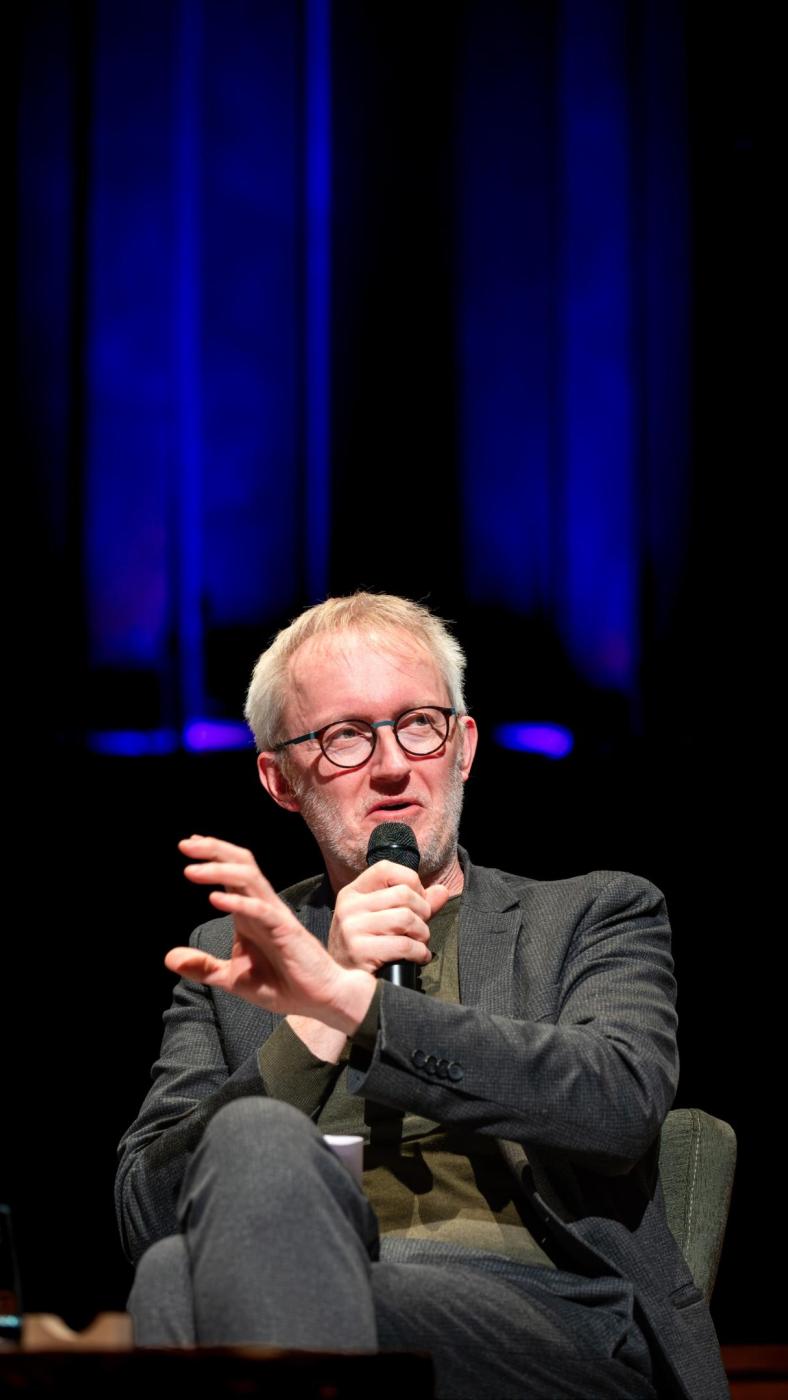
VUB professor Vincent Ginis brought forward the evening’s most uncomfortable question. The leaders of AI companies themselves warn about the dangers of the technology they are building: from mass job losses and cyber or biological attacks to systems over which humans may lose control, and even the end of the world. Yet the race continues unabated. Is international regulation still possible at all?
Diana Mangalagiu refused to go along with the idea that catastrophe is inevitable. Political choices remain possible, and therefore so does regulation. David Van Reybrouck preferred to focus on risks that are much closer to home: a financial AI bubble, for instance, or the vulnerability of our critical infrastructure.
Paul Verhagen, in turn, warned against an obsession with the end of the world. The more attention is devoted to spectacular existential AI risks, the easier it becomes to lose sight of the harm the technology can already cause today.
We Choose Our Digital Coloniser Ourselves
And so the debate returned to where it had begun: power. Europe likes to talk about digital sovereignty, yet a large part of the infrastructure on which the continent runs is in American hands. Cloud services, AI, internet services, satellites: the dependency is considerable.
For David Van Reybrouck, however, dependency need not mean powerlessness. He delivered the evening’s sharpest one-liner: “We might be digital colonies, but we can still choose our coloniser.”
So who rules the world? Who Rules the World? deliberately did not provide a simple answer. Instead, it offered a more uncomfortable observation: technology may evolve at great speed, but the most important question remains who decides what we use it for, according to which rules, and in whose interests.

Next Caroline Pauwels Lecture: 16 February 2027
From the struggle for power to the pursuit of peace
The big questions of our time deserve open and critical debate. Following a successful first edition of the Caroline Pauwels Lectures, curator Koert Debeuf turns our attention to one of today's most pressing issues on 16 February 2027: war and peace.
Five years after Russia’s full-scale invasion of Ukraine, Europe and the world face difficult choices. Can there be lasting peace if serious human rights violations go unpunished? Or could the pursuit of justice stand in the way of a fragile peace? And how do we uphold international law in a world where it is increasingly under pressure?
Our first international guest has been confirmed: Oleksandra Matviichuk, Ukrainian human rights defender and chair of the Center for Civil Liberties, which was awarded the Nobel Peace Prize in 2022. Which international voices will join her in conversation? We will be announcing the other speakers soon.
Caroline Pauwels Lecture – On War and Peace
Tuesday 16 February 2027 | Flagey, Brussels