

Practical
Wednesday, 2 December, 2026
- 17:00 until 19:00
Free of charge
Registration until
The Vrije Universiteit Brussel, professor Rocco Bellanova and the DATAUNION team warmly invite you to the public lecture of their ERC-funded project exploring the construction of a European Data Union.
While Artificial Intelligence is the talk of the day, something as important is shaping how our digital societies are and will be governed: the interoperability of existing and future databases. In the last decade, the European Union has adopted legislation promoting the interconnection of multiple databases, including in domains at the core of classical state functions, such as public security and the control of borders. For instance, the 2019 Interoperability Regulations want to facilitate data access across six large-scale EU IT systems. Other initiatives concern the transfer of millions of travellers' data between the private and the public sector, or the cross-checking of DNA and biometric databases. Interoperability has never only been just a technical or legislative solution, yet its lengthy and complex implementation raises novel questions about what a good ‘Data Union’ should look like.
In this public lecture, the DATAUNION team will present some major political, socio-technical, and legal issues that have been emerging from their research. When does interoperability become political and where are its politics? How do legal obligations and technical solutions speak to each other and are renegotiated when designing concrete interoperability mechanisms? Is data protection enough in ensuring interoperability alignment with EU values and fundamental rights? Can notions from critical archival and information studies helps us better understand contemporary challenges of data management? What is the role of private companies in governing the future of European IT systems?
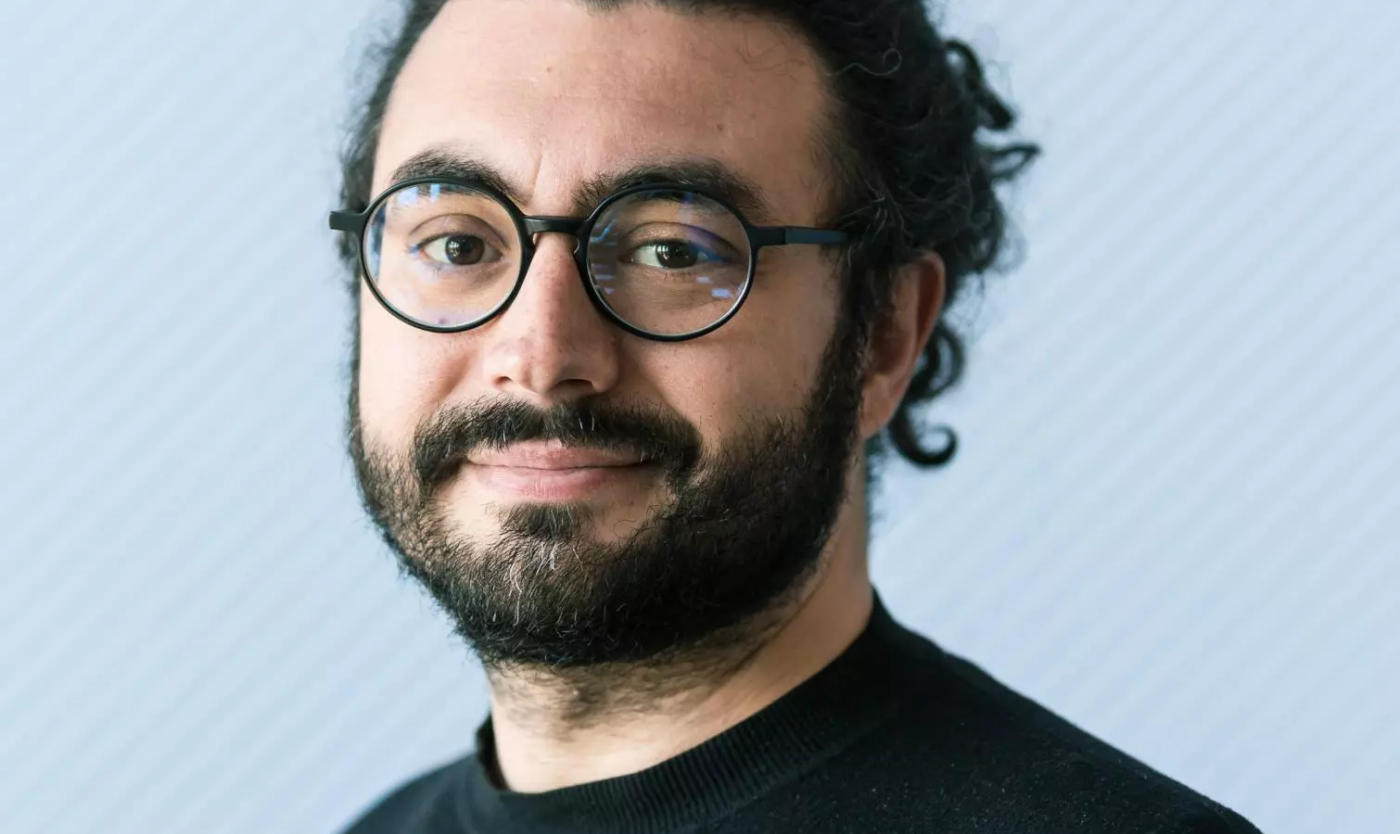
Rocco Bellanova - (c) Photo by Dirk Gillissen
About the DATAUNION Team
Professor Rocco Bellanova is a Research Professor whose work sits at the intersection of Politics, Science & Technology Studies (STS) and Law. His research studies the relation between (in)security, digital technologies and politics, with an empirical focus on European security and its data infrastructures. He has guest-edited special issues on the technopolitics of interoperability, on European digital sovereignty, on technoscience in security practices, and on the role and nature of critique in International Relations. He is the Principal Investigator (PI) of the ERC Starting Grant DATAUNION , as well as the PI of the WEAVE research project INFRASEC: Infrastructuring International Security, funded by the FWO and the SNSF (with co-PI Prof. Rosamunde van Brakel at VUB and Prof. Matthias Leese at the University of Zurich). He is also involved in two major research networks - the COST Action DATAMIG: Data Matters: Sociotechnical Challenges of European Migration and Border Control (member of the management committee) and the FWO-funded Research Network on Technology, Security and Conflict (as co-PI). He is a member of the Law, Science, Technology and Society (LSTS) large research group at VUB and a member of the FARI Institute. Rocco is a co-editor of the leading interdisciplinary journal Big Data & Society, a member of the editorial board of Tecnoscienza: Italian Journal of Science and Technology Studies. In 2027 he will join the editorial board of International Political Sociology.
Dr. Vanessa Ugolini is Postdoctoral Research Fellow at the Law, Science, Technology and Society (LSTS) research group of the Vrije Universiteit Brussel (VUB) where she works as part of the ERC Starting Grant DATAUNION project and of the Weave INFRASEC project, co-funded by the FWO and SNSF. Leveraging on critical security and science and technology studies (STS), her research explores questions related to interoperability, data integration, algorithmic systems, and infrastructural developments in the context of police cooperation and border management. Vanessa is also leader of Working Group 2 – The Observatory of the COST Action DATAMIG (Data Matters: Sociotechnical Challenges of European Migration and Border Control) and co-editor of an edited volume on the methodological encounters between law and digital technology (to be published with Routledge in 2027).
Iwan Oostrom holds an MA European Union Studies from Leiden University and an MA Philosophy and Contemporary Critical Theory from Kingston University London. Within DATAUNION, his PhD research focuses on the 2019 Interoperability Regulations, exploring how law and legislation shape and interact with the processes and challenges involved in the technical implementation of the interoperability components, particularly the Multiple Identity Detector (MID).
Megan Leal Causton is a PhD researcher on the ERC funded DATAUNION project at the Law, Science, Technology and Society Research Group (LSTS) at Vrije Universiteit Brussel. Prior to joining VUB, Megan worked as a Data Scientist and Researcher within the tech and GLAM sectors. She holds an MA from the University of Amsterdam in Archival and Information Studies. Her work addresses information management, digital technologies and their development, computational research methods, AI, Law, and the politics surrounding data protection, governance, and informatics. Currently examining EU AFSJ database interoperability's impact on e-evidence systems, accountability mechanisms, and cross-border justice frameworks.
About the European Research Council (ERC)
The European Research Council (ERC) provides funding for the implementation of ground-breaking research for a period of 5 (6) years. The ERC programme, provides a distinctive funding mechanism devoted to scientific excellence for all scientific fields.
Currently, Vrije Universiteit Brussel proudly hosts more than 20 ERC-projects and their Principal Investigators.